Case studies · Personal · Mumbai · status correction
Home · Case studies · Axis Post Write-off error removed
A 759 score, rejected anyway: the Post Write-off status a bank apologised for

Background
Mr. Nehal Kiran Desai of Mumbai is the case that proves a truth we repeat constantly: underwriters read statuses, not just scores. His CIBIL stood at a healthy 759 — and his loan applications were being rejected anyway. The reason sat on one line of his report: an old Axis Bank credit card reflecting "Post Write Off Closed" — on an account he had little information about and was not even certain was his. What he was certain of was his own conduct: dues paid on time, outstandings cleared in full, always. Alongside it sat settled-account and DPD concerns — including an HSBC account — that needed their own resolution.
The Axis status — and the acknowledgment
Before coming to us, Mr. Nehal had contacted Axis Bank himself; the account then showed an overdue, and instead of a clear explanation, the status eventually changed — to Post Write Off Closed. When the case reached my desk, the demand to the bank was specific: verify the account's details, confirm whether it actually belongs to this client, and explain the status against his understanding that all dues stood cleared. After reviewing the matter, Axis Bank acknowledged the reporting was incorrect and apologised for the error — and corrected it: the write-off status was removed and the account updated as properly closed. The single line driving his rejections was gone.
The HSBC account — a different wall
The settled HSBC account posed the opposite problem: not wrong data, but no data. The bank took its time; reminders went unanswered; even the client's own relationship manager produced assurances but not the information needed to complete payment and move the account forward. So the matter was escalated through the public-grievance (PMO) route — and HSBC responded promptly: documents, account details and payment information arrived, and the client completed the payment process smoothly. The remaining DPD and settled-account concerns were addressed as part of the overall resolution.
The outcome
With the report corrected, the result showed up where it matters most — not in the score, which barely needed to move (759 → 765), but at the bank counter: the loans and credit cards that had been rejected were subsequently approved. The status field, before and after, is documented below in his own report extracts.
Report evidenceView his reports — before and after+
Tap to compare the two reports
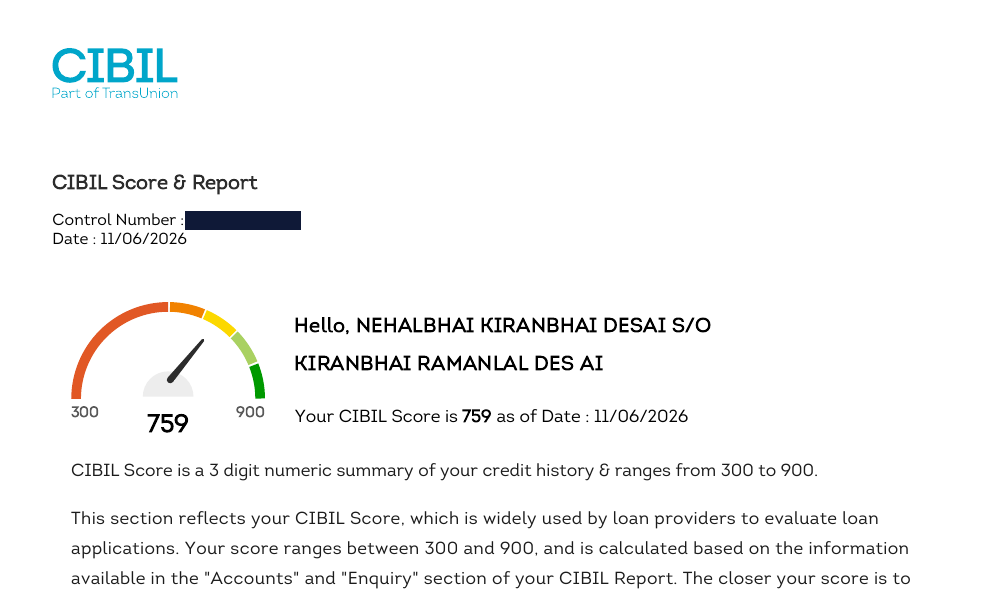
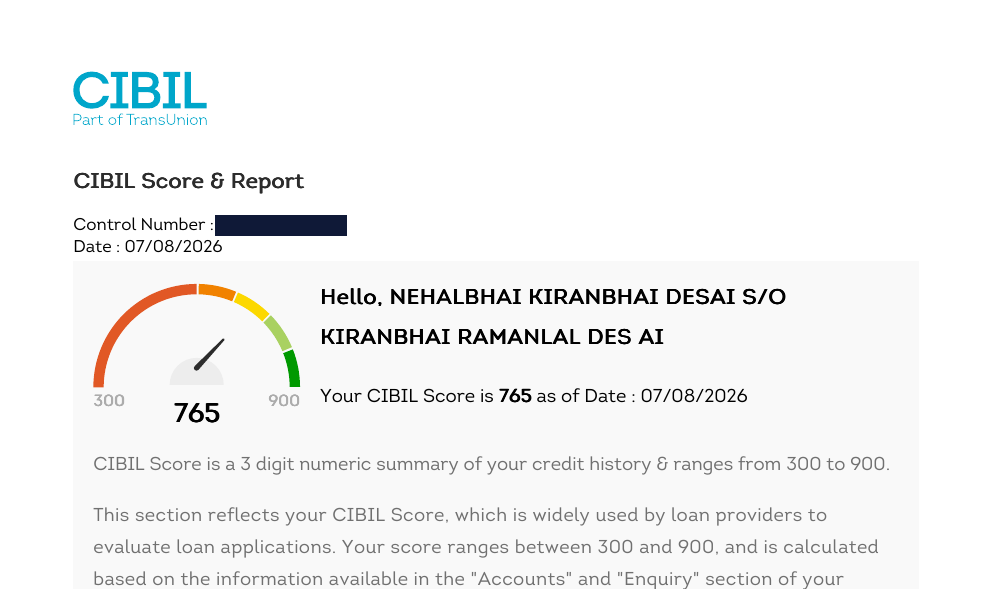
The Axis Bank credit card — the status field, June versus August
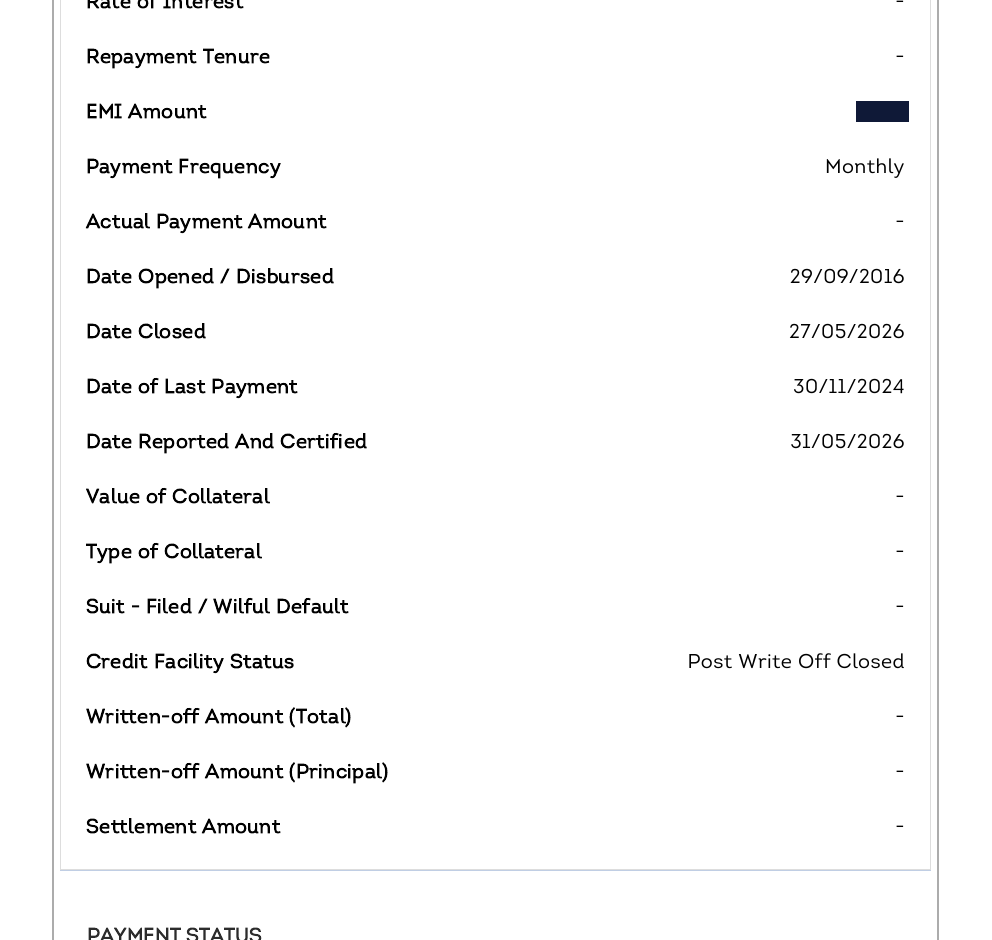
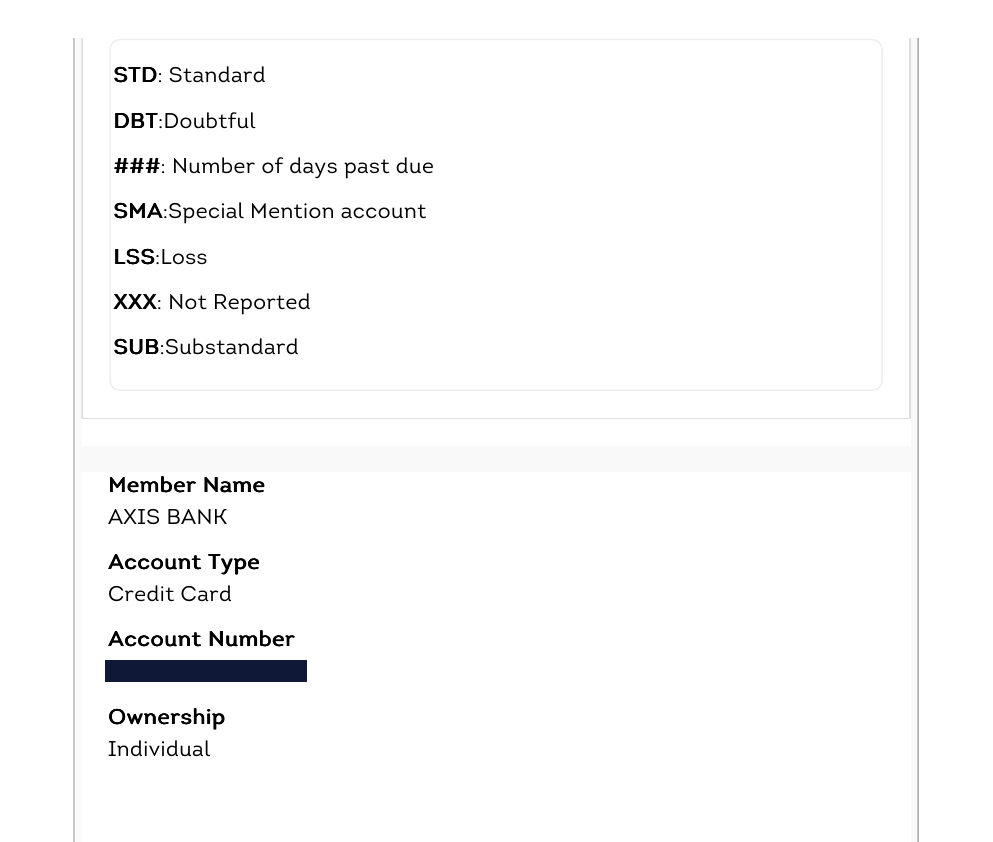
Raw extracts from Mr. Nehal's own TransUnion CIBIL reports, labelled by report pull dates. Account numbers, amounts and identifiers are redacted; the banks are named in this article. Published with his consent.
His testimonial, in his words
Recorded by Mr. Nehal — 1 minute 30 seconds, captions available. His transcript, verbatim:
Hi, myself Nehal Desai, I am from Mumbai. So I approached Kenstone for settling my credit issues which were going on with various banks, and because of that my credit score was hampered and red flags were showing in my credit score, in my CIBIL score. So Michelle was my relationship manager at Kenstone, and the entire one-month journey for settling all the accounts — you know, fighting with all the banks and sending emails to them, reminders to them, and using various escalation metrics and solving the problem — I think that was the best part, what Kenstone helped me in achieving my, you know, best credit score. And after removing all the red flags, what I found was my credit score improved gradually, and whatever loans and credit cards which I was getting rejected on, that all got accepted. And thanks to Kenstone, and thanks to Michelle especially, for taking me through out of this CIBIL war. So thanks, thanks, and I recommend Kenstone to all my friends and colleagues and also the other people. Thank you.
Why this case matters
Three reasons. It is the clearest proof in our library that a good score does not protect you from a bad status — 759 was rejected until one field read differently. It documents something rare in writing: a bank acknowledging its reporting error and apologising — which is what the verification demand exists to produce; wrongly reported statuses do not survive a lender being made to actually check. And it shows the two walls in one case: wrong data at Axis, absent data at HSBC — each needing a different tool, disputes with verification demands for one, escalation for the other. If a status you don't recognise is costing you approvals, start with what write-off statuses actually mean — then start with the analysis.
More documented cases
Different problems. Same standard.
Three lenders, four bureaus — one report finally telling the truth
737 → 790 · 40–45 days · ₹16L sanctioned
 By Smitha N
Stuck for a year — even with another agency. Closed in three months.
2–3 months · overdue removed
By Michelle JuanitaThree delinquencies, two banks — one corrected rank
CMR 7 → 5 · 15 days
 By Akshatha Shetty
A genuine written-off account, resolved the honest way — in 14 days
14 days · NDC obtained · fully remote
 By Aradhana Prasad